
Saturday, October 19, 2013


Friday, April 5, 2013
Cain's Arcade Event
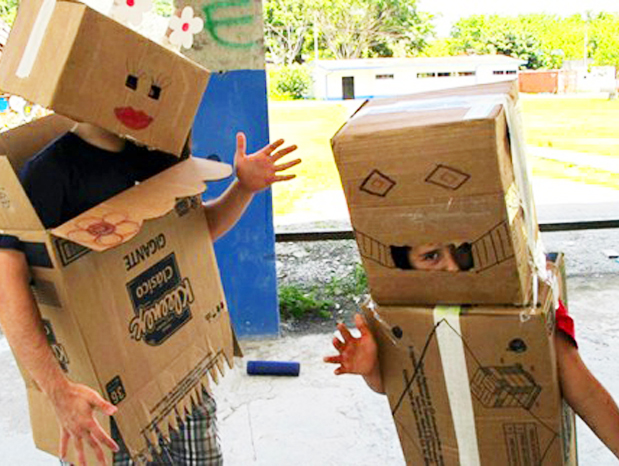
JOIN OUR CARDBOARD CHALLENGE!

WHEN: APRIL 13th @1:15-3:45
WHERE: The Downtown Chapel on Burnside and 6th
We
are making our very own Cardboard Arcade in celebration of Cain’s
Arcade (look it up online because it is awesome!). Contact Brett Boeh
at boeh14@up.edu for more information. Cars will be carpooling for the event but space is limited on a first come basis.
Tuesday, April 2, 2013
The Dignity of Death and Dying: A Multidisciplinary Exploration
 |
| My sister (Kate), my mom (Michelle), and I at my grandfather's house last weekend enjoying his last view. He asked my uncle to reposition his bed so that he could look out and see this beautiful lake. |
The following is my capstone project for my minor in Social Justice. Join me when I present on Founder's Day at the University of Portland. Yay! It also means I just finished my minor in Social Justice!
It is no mystery that the death and dying process is one that we will
all confront at some point in our lives whether it be our own death and
dying experience or those around us. The purpose of my research has been
to reflect upon and observe the qualities that contribute to a more
dignified death and dying process, to understand the roots and methods
of palliative care, and to advocate for a more dignified dying process
for “the others” in our society. It is my assertion that in allowing
someone to die with dignity, motivates individuals to live to a greater
degree with dignity.
Preliminary to the discussion of death and dying, it is imperative to
discuss our terms. Death and dying is a heavy and ambiguous topic.
Psychologically, the dying process begins when the knowledge of death
becomes a reality for an individual and death is the eventual
consequence of that dying process. Psychologists observe the course, the
social support, the level of pain management, the amount of control a
patient has over their medical course, and the family and friends
experiences to understand the process of death and dying. Similarly, the
fields of social work and nursing within the palliative medical field
address a holistic vision of the death and dying process taking into
account the multidimensional aspects that psychology aims to study and
implementing them into practice with patients and families. Lastly, in
the theological discipline, death and dying is more often a constant
cycle throughout an individual’s life. It is not separated by the
eminent earthy death, but is reflected in the spiritual death of an
individual. For the purpose of this paper, I will be focusing only on
the Catholic understanding of death and dying.
Equally important to the academic understanding of death and dying, I
believe is my own context of death and dying. Throughout my paper, I
will discuss four personal experiences from my own life that reflect my
understanding of the death and dying experience both in the United
States and in Costa Rica. These experiences will be used to better
understand the disparities between different communities through the
death and dying process and in addition, will highlight the complexities
of the role of social justice. Names and specific facts about patients
have been changed in order to maintain the sanctity of their life after
death with the exception of my own grandfather whom I feel would have
been pleased to be included with no adaptations.
Pablo Freire, author of The Pedagogy of the Oppressed,
said “Any situation in which some men prevent others from engaging in
the process of inquiry is one of violence;… to alienate humans from
their own decision making is to change them into objects”. This
certainly holds true in the dying process of many Americans in the
United States today. As a hospice volunteer, I have had the opportunity
to accompany individuals on their path through the death and dying
process. One individual, whom we will call Andrew, highlights the
disparities in social support and the desperation for a sense of control
over his end of life battles.
I
first met Andrew when he was already in severe pain as a result of his
dying process. He was in his mid-thirties, was suffering from liver
failure, and was a veteran for the United States military of Spanish
descent. As my time with Andrew continued, I learned that he had been
previously homeless for over ten years, that he had not had access to
medical care for that entire time, that he was raised by a single mother
in Spain who was a gypsy, and that he had only a fifth grade education.
After three months at Andrew’s bedside, giving him massages and
watching movies with horses in them, I learned that I was Andrew’s only
friend. During my Spring break, I went home to San Diego to visit family
and made sure to tell Andrew that I would be back--he told me he would
wait for me. When I got off the plane a week later, I immediately drove
to Andrew’s home to spend time with him. When I arrived, I combed his
long hair, I rubbed his back, and woke him with a smile. Andrew smiled,
extended his arm to hold my hand, and sat peacefully until he died five
minutes later. Following Andrew’s death, there was not a funeral or
ceremony to remember the gentle person that he was. At this moment, I am
certain, I am one of the few individuals in this world that will ever
know his real name or his powerful smile.
But
what does the life of Andrew mean in the greater scheme of things?
Andrew’s lack of medical care, social support, and his following lack of
a ceremony explicitly support the disparities present in the lives of
many impoverished individuals who will die without the closure that is
possible in the process of death and dying. The beauty of Andrew’s story
is despite the loneliness that he endured throughout his life, he did
not die alone; Andrew’s story is one of dignity. When I imagine my own
dying process, I am sure it is similar to many other middle class
Americans. I imagine being surrounded by my loved ones, I imagined being
embraced by my partner, I imagine being elderly. This was not the case
for Andrew and I would argue that given greater strides towards social
justice, it could have been.
In
fact, a study on Dignity Therapy evaluated the success in trying to
increase the dignity of patients during their dying process. Dignity
Therapy is designed to “bolster the dignity of patients nearing death”
(Harlows). It is an individual psychosocial therapeutic intervention
with a 76% success rate among patients. The therapy was developed in
response to the data that suggests that a lack of dignity during the
dying process had increased levels of psychological stress and higher
ratings of pain. The most vulnerable to being prone to having less
dignity were individuals that report feeling depressed and those whose
physical health status deteriorates to such a degree that they become
dependent on caregivers. Dignity Therapy consists of a two step process.
First, the therapist asks the patient a series of questions in order to
discuss what might be an anxiety during their dying process. Second,
the therapist helps the patient confront the outcomes of the initial
questions. Often, this means conversations with family members or diving
into spirituality. The results of this study suggest that heightening
the dignity of the human person is not just a moral or spiritual
obligation but also is necessary in aiding medical care.
Therefore,
if Dignity Therapy and furthermore palliative care is a promising
component to increasing the vitality of life, how should it be
implemented? This was precisely the question that Florence Wald posed in
the early 1970’s. Florence Wald is the founder of palliative care in
the United States; she opened the first Hospice in Connecticut in 1971.
Fifteen years later, more than 1000 new hospices had been started
following her success. Hospice care in the United States “represented a
paradigm shift in the medical treatment of the dying” (Adams). After
World War II, it was common to seclude the dying to the back of the
hospital where they were to sit until they passed. Hospice care, brought
the comfort of dying in your own home to medical care and also
increased the awareness for maintaining comfort while dying with
palliative care. As a nurse, and what people would now argue today, a
social worker as well, Florence Wald advocated for the importance of
dialogue between practitioners and patients. She revolutionized the
hospice care team inviting chaplains, psychologists, and volunteers to
participate so that patients had access to the most dignified death and
dying process. Integral to our discussion of social justice, Florence
Wald centered her leadership around a reverence for life and a need for
justice.
Florence
Wald’s example of leadership bringing different disciplines together to
achieve positive social change is instrumental. Two summers ago, I
traveled to Costa Rica to explore the issues of poverty and the
disparities in education between individuals in Costa Rica and my home
in the United States. While there, I became close friends with many of
the families. One in particular had just experienced a difficult loss.
The young man’s name was Maicol, he was nineteen. Waiting at the bus
stop, he dribbled his soccer ball. When the ball accidentally rolled
into a puddle, Maicol went to retrieve it. Maicol did not know that a
live wire had fallen into the puddle and he was electrocuted while his
brother watched helplessly. As a young adult myself, I cannot begin to
fathom that life can be so normal at one moment and gone in a second. I
was in Costa Rica for the three day funeral that followed Maicol’s death
and witnessed the abundant love of his family.
I
tell the story of Maicol to illustrate that the issues of social
justice are deep but also to highlight the particular pathway of this
discussion. The issues of poverty that led Maicol to have to take a four
hour bus to work at a small paying construction site each day are
debilitating. However, paramount to this discussion is the dignity of an
individual’s process of dying and death. While Maicol’s dying was
unnecessary and unexpected, his death was honored in the rejoicing for
the life he had. Therefore, giving an individual dignity after their
death, also allows the community to celebrate the importance of dignity
in their lives. Maicol’s grandmother, Berta, happily collected fake
flowers from trash cans to honor his grave. Maicol will be remembered.
It
is here that the tension between the life experiences of Andrew and
Maicol becomes alarming. Andrew will not be remembered by a family of
individuals and his grave will not be decorated. In our culture, the
degree to which we are remembered often quantifies society’s perception
of what we were worth to society. Does this mean that Andrew is nearly
worthless? While I would strongly deny that this is the truth, I do
believe that it is the duty of social justice advocates to give
individuals like Andrew the dignity of worth despite their social
standing. Andrew deserved to be loved while he was alive and too many of
the people in the Portland community denied him that love; it was of no
fault on Andrew’s part that he died with one friend. It was the fault
of his community.
From
a theological perspective of the Catholic Church, Andrew’s inherent
dignity was denied before his dying process was able to begin. The
Second Vatican Council emphasized the dignity of the human person as an
official Catholic Social Teaching. The Catholic Church teaches that the
dignity of the human person comes from God, not the gender, sex, social
class, race, economic status, or ability of the individual. For this
reason, Andrew deserved the love and respect of his community.
Therefore, Catholic Social Teaching would argue as Bishop James T.
McHugh eloquently says, “No life is of inferior value, beyond protection
or sustenance. The law must be the guardian of each person’s life and
rights, and it must apply equally to all”. The role of social justice
according to Catholic Social Teaching would be to provide the security
of dignity through the dying process to all individuals.
However,
social justice remains the issue. What is the role of an advocate for
social justice? Given the disciplines of psychology, social work,
nursing, and theology, a social justice advocate would argue for the
inherent dignity of an individual and support their death and dying
process with social support and systems of support. This task to many
seems daunting. What could one individual do to increase the dignity of
the dying? I argue that this task begins at a personal level and extends
to the community.
As
an individual, it is imperative to focus on enhancing your own dignity
while you are still living. This can be attained through reflecting on
your needs and being assertive in approaching them, surrounding yourself
with humble and grateful friends, making time for spirituality and
reflection, and approaching life with meaning. Perhaps the most
ambiguous of these suggestions is to approach life with meaning. An
individual who approaches life with meaning values the relationships in
their lives, strives to be happy, and infuses meaning in their own life
by giving support to others.
The
second step to increasing the dignity of the dying is to reach out to
expand the dignity of your loved ones. Three weeks ago, my grandfather
was diagnosed with mesothelioma, a cancer caused by asbestos. After a
two week battle, he passed away surrounded by his wife and children, and
grandchildren. Primary to the dignified death of an individual is just
being there. This certainly does not mean physical presence although it
is valuable. It means emotionally sitting with an individual who is
dying and walking the path with them in solidarity and compassion. In
addition, it is important to allow your loved one to continue to make
choices. Just because someone has entered the dying process does not
mean that their autonomy is already deceased. We must learn to be
comfortable with the silence of death; often there is nothing to be
said. Lastly, it is okay to talk about your fears and your loved one’s
fears. In fact, it is a welcomed suggestion and can often provide
closure similar to the results of Dignity Therapy.
The
last step to offering dignity to the process of death and dying is to
assist in promoting dignity to “the other”. This may be someone who you
have yet to know closely, it may mean someone from a different social
class, race, religion, sex, or gender. Perhaps one of the greatest
examples I have seen of promoting this dignity to “the other” has been
at the Down Town Chapel, a church serves the houseless population in the
Old Town area. In February, a long time guest of the Down Town Chapel
passed away. He had been living on the streets in Portland for the last
three years and he was known for a constant smile and a big hug. At
about three hundred pounds, the doctors had been telling him for a long
time that his risk of cardiovascular disease was strikingly high. His
life situation however prevented him from seeking a healthier diet and
access to more interactive health care. When he passed, I attended his
service as a friend. I was surprised to find that two hundred other
individuals found themselves in the same room as me, honoring the man
that he was. This example shows that being in a place that society deems
to be lower does not mean that you cannot receive dignity during the
process of death and dying. Communities are able to rally together to
build the dignity of individuals and therefore transform the dignity of
their community.
The
transformation of our society’s perception of the other in creating
dignity for them is the ideal of social justice’s interaction with the
process of death and dying. The dignity during the process of death and
dying of the other can be increased by listening to individuals so that
they may have a voice when they are silenced, advocating passionately
for their rights, and giving them the gift of remembering their
presence.
Works Cited
Adams,
Cynthia. “Dying With Dignity In America: The Transformational
Leadership of Florence Wald.” Journal of Professional Nursing 26.2
(2010): 125-132. PsychINFO. Web. 25 March 2013.
Lingis, Alphonso. “Dignity.” The Humanistic Psychologist 38.3 (2010): 267-268. PsychINFO. Web. 1 Apr. 2013
McHugh,
Bishop James T. “Library: Death and Dying Issues-Catholic Culture.”
LIbrary: Death and Dying Issues- Catholic Culture. Catholic Culture,
n.d. Web. 20 March 2013
Mike
Harlos, et al. “Learning from Dying Patients During Their Final Days
Life Reflections Gleaned From Dignity Therapy.” Palliative Medicine 24.7
(2010): 715-723. PsychINFO. Web. 1 Apr. 2013.
Monday, April 1, 2013
The Dignity of Death and Dying: Prezi Presentation
If anyone would like to join in Founder's Day and be present for the presentation, it will be at 11:15AM on April 9th at the University of Portland in Buckley Center, room 111.
`
Wednesday, March 27, 2013
Grandpa Mike
-->
 |
| My grandpa as I will always remember him, holding me tight. |
 |
| A fun day at the zoo. |
 |
| From left to right, my step-dad, Scott, grandpa, Aunt Laura, Kate (my sister), my mom, and I. This was our last family ski trip. Grandpa skied until the day he was diagnosed! |
Three weeks ago my Grandpa Mike was diagnosed with mesothelioma, a cancer caused by asbestos. Two weeks ago I was able to spend five days in Montana enjoying his company and getting to introduce him to my charming boyfriend, Taylor, for the first time. Unfortunately, Taylor will only have a small view of the man my grandfather was as he passed away soon after. I dedicate this letter to him; the swiftness of his death didn't allow him to read it for himself but I know he is watching down from up in the sky. He was a good man and a better grandpa and he will be missed by all who knew him.
Grandpa,
These
last few weeks, I have been reflecting a lot on time. There is no doubt I crave
more with you. Perhaps bitterly, I am frustrated at the swift nature of death;
my awareness of these being my last moments to know you intimidate me. I have
an overwhelming feeling that if I don’t soak in every part that makes you the
wonderful man you are, I won’t have been close enough. There is a constant
shame in feeling that I could have called more often, I could have visited more
frequently. In short, I would have liked to have loved you better. But here, at
this moment of reflection I recollect the things that dismantle my shame.
I
know I will never forget the way your glasses tilt to the bottom of your nose
when you are studying something. They also tilt when you look at me
questioningly. The moment your eyes narrow, I am sure you know something I
don’t. Two summers ago, you brought the jet-skis out for me and my best friend,
Morgan, to have fun on the lake. We had a blast and got half way across only
for one of them to run out of gas in the middle of Flathead. For three hours,
we struggled to tug the tired jet-ski with the one that still was holding
strong. As I remember, Morgan was lying on the jet-ski with one hand on her
head like a model posing to express desperation strewn across the seat, her
hair flowing in the wind. I was tugging that jet-ski at 3 miles per hour hoping
to get back home before dark. You, grandpa, came forging towards us on the
pontoon like a knight; your back was straight as you steered with a robust
knowingness amused at our misfortune. But, when you got to us, your head
dropped, your eyes narrowed, and your glasses fell. You told me you had assumed
we met some boys to party with and that when you saw us in the middle of the
lake, we were disappointingly good.
You told me you couldn’t have been more proud. Here I was, having thought I
ruined my grandpa’s jet-ski and you told me you were proud. I won’t forget that
moment. I also won’t forget that you made us continue to tug into the cove
without any help—you were always very good at letting us learn our own lesson.
I
will never forget waking up early in the morning to catch you dutifully
scooping out mouthfuls of peanut butter and then proceeding to find the pumpkin
pie in the fridge, piling it high with a container of whipped cream, and
happily eating your breakfast standing up. It was like you were too excited to
even sit down because that pie was going to be too good. And you didn’t waste
resources grandpa. I know this is true because most of the time you would use
the pie pan as your plate to make sure there were less dishes.
I
still have a score-card from miniature golf when you picked Kate and me up from
school as a surprise. I remember feeling so special because my Grandpa Mike
wanted to play golf with me. I know I am not alone in feeling special because
of your presence. There was a time our family was debating about politics or
religion around the dinner table and you told my mom that even if you didn’t
agree with everything she said you would want her on your team because she was
a good thinker. When we all went to bed that night, mom cried because she was
special to you, and that was a feeling that was unparalleled.
Last
week, when I started thinking about time, I tried to remember my memories of
you. Again, the desperate feeling of needing a tangible memory to keep hold of
made me feel like maybe I could keep you here a little longer too. Most of my
fondest memories don’t include action, most of them don’t have words you were
more subtle than that. Yes, I will remember that you liked to read your books
in the bathtub, that you checked that the pontoon had lifejackets for everyone
on board but never forgot the beers too, that you had a secret room with a
complete artillery, that you cuddled Maya. I will remember that you drank that
nasty green machine shake in the mornings, the way you worked tirelessly, and
your straightforward honestly even when it hurt, oh and when I look in the
mirror and think my butt is WAY too big I will remember I have you to thank.
But
perhaps most importantly, I will remember you loved God with your whole heart.
The last time we spoke with just the two of us, I said, “what’s going on
grandpa” and you said calmly, “well, I am dying” I asked what you thought of
that and you told me you wanted your family here. I was sick with a cold and I
didn’t want to make it worse and you chuckled and said you were sick too. I
asked what you thought of dying and you said you were happy to meet the face of
the Lord. That made me happy too but I cried saying I couldn’t imagine my
Grandma Gail being alone. I told you my heart was hurting because of that. You
cleared your throat, and told me “when you think of the physical body, your
heart starts to hurt too”. So for just a moment grandpa, I’d like to selfishly
sit with our physical bodies because I am hurting having to accept loosing you.
I am in a lot of pain thinking of life without grandpoopa and I know we are
going to have a lot of trouble “herding cats” without your leadership. There is
a Christian mystery behind suffering. Perhaps you passing during the Easter
season is only a reminder of this.
I
am sure in these moments, I loved you as much as a granddaughter could and
assuredly, I felt your love too. I envy the moments of previous summers when we
sat around the house, listening to the Eagles, quietly unaware of the slipping
time but I look forward to someday sitting in the glorious presence of the Lord
with you.
Tuesday, December 18, 2012
Connecting Communities
 | ||
| The Children at Little Prinz Children's Home, Kenya |
I remember my moment of realization clearly. I was in third grade and a friend of our family was struggling. It was Christmas time and they weren't making ends meet. They had four kids, one being disabled, and there was no way presents would be under the tree that year. For a third grader, it is hard to imagine what Christmas would look like without presents. We had been given an assignment in class to write a Christmas story and I wrote mine about one of the little girls in the family. My story explained her waking up in the morning to tons of presents that were left for her by a community that cared. When I read it to my mom, she helped make my fairytale into reality. We collected over 300 presents that year and their Christmas morning stands out in my mind as a true celebration of small communities connecting to spread a little love.
My 3rd grade Christmas collection is a pleasant reminder for me that helping out is sometimes only an arms length away and then sometimes, it takes a little leap. Regardless, connection is attainable. When I reflect on my life, the moments that have been most life giving, that have expanded my understanding of the world and the people that live in it, have been moments when I realized that other people are not so different from myself. My Summer in Costa Rica, is an easy example. Here are these kids with a childhood that in a lot of ways is broken, that live far away from my home, that care about day to day survival instead of Christmas presents, and that hardly ever make it to the 5th grade. And yet, there was something so deeply similar between the children and myself. I know it is true, as humans we all look for love and seek ways to give love to other people; perhaps this is what connects humanity so deeply.
This Summer, I will be heading to Kenya to help at a Children's Home for orphans called Little Prinz, in Kakamega. Presently, there are 13 children that are supported with a home, healthy meals, nurturing caregivers, an education, and health care. Little Prinz offers a home that children can be proud of and I can say without having been there yet, that there is a deep connection between myself and the children there. In fact, I would assume that if you are reading this, there is already a deep connection between yourself and a child that is waking up right now in a comfortable bed at Little Prinz. We are connected by a need for love and a need to give love. I urge you to continue to follow along my journey and be a part of the relationship that is built purely out of a love for other human beings.
Subscribe to:
Posts (Atom)